If you are comparing a custom AI receptionist backend with Vapi, the real question is not which one is more impressive on paper. The real question is which one fits the stage, workflow complexity, and economics of your business.
Vapi is useful. It helps teams launch voice agents fast. But speed to first version is not the same thing as fit for long-term receptionist operations. That is where the build-vs-buy decision gets real.
The fast answer
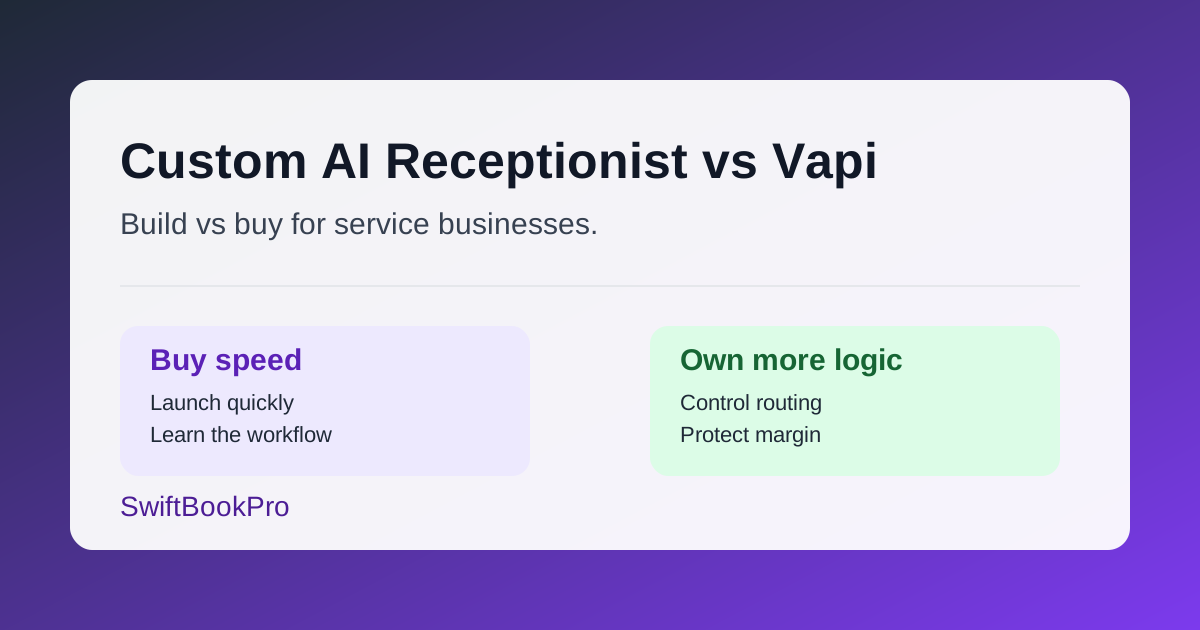
Use Vapi if your main goal is to get something live quickly and learn. Lean toward a custom backend if your main goal is to control qualification, routing, fallback behavior, and unit economics over time.
Where Vapi makes sense
Vapi can be a strong choice when you need to move fast, your engineering team is small, or you are still learning what your call flow should be. Early on, speed beats purity. A lot of teams do not need a perfect architecture on day one; they need signal.
Where a custom backend starts to win
A custom AI receptionist backend becomes more attractive when your workflow stops being generic. That usually happens when you need tighter control over lead qualification, emergency versus routine call handling, after-hours logic, and booking protection. Once those things matter, a generic orchestration layer can start to feel like a tax.
The hidden cost of generic workflows
Teams often compare platforms by setup speed and monthly cost. That is too shallow. The hidden cost lives in bad decisions at runtime—low-quality jobs that waste the calendar, missed emergency triggers, or inconsistent fallback behavior. Those are not cosmetic problems; they hit revenue and margin.
A simple build-vs-buy checklist
Choose a platform-first path if you need launch speed more than deep control and your process is still changing. Choose a custom-backend path if your call handling rules are clear, qualification quality matters a lot, and you plan to make the receptionist a core operating system.
What we would do in each stage
If a business is very early, we would not force a custom stack too soon. But once the workflow is stable enough to define, we would rather own the decision layer than keep stretching a generic platform to fit. That means owning the logic that actually affects conversion and operations.
Final recommendation
If your receptionist is still an experiment, buy speed. If your receptionist is becoming operational infrastructure, buy less and own more. For service businesses, the long-term winner is usually the setup that makes better decisions on real calls, under real pressure, at a cost structure you can live with.
Need help deciding whether to build or buy your AI receptionist stack?